Market Analysis

Salt Spring Island real estate in depth monthly analysis by Sea to Sky Properties’ broker, Li Read

B.C. Government Continues to Fundamentally Change Control of Property

From the Fraser Institute

By Jason Clemens and Tegan Hill

February 2026

B.C. Government Continues to Fundamentally Change Control of Property

The Quiet Erosion of Property Rights

While the Cowichan court decision, and to a lesser extent the more recent mineral rights court decision, have dominated discussions on how property rights are being eroded in British Columbia, the Eby government quietly signed yet another land-use agreement with an Indigenous group on Vancouver Island that fundamentally changes property rights and decision-making in the area.

As the premier himself has recognized, the erosion and uncertainty of private property in the province is imposing huge costs on average British Columbians, and will continue to do so until the government shows genuine leadership and provides clarity on this issue. The premier and his government cannot simultaneously oppose the recent court decisions while negotiating bilateral agreements with Indigenous groups that effectively have similar results as the court cases.

The Cowichan Decision: A Turning Point

The stability of private property in the form of fee simple ownership, which is what most homeowners and businesses maintain, was called into question in a 2025 court case recognizing the Cowichan Tribe’s Aboriginal title over 800 acres of Crown and private land in Richmond, a suburb of Vancouver. The judge found that where Aboriginal title is deemed to exist, it is “prior and senior” to fee simple property rights.

This has thrown the status of more than 150 private property owners into turmoil and forced the provincial government to establish a $150 million-plus fund to support loan guarantees and other measures as property owners struggle with uncertain property rights, in some cases an inability to renew mortgages and the potential for real declines in their property value.

Premier Eby heavily criticized the decision and indicated his government would support the appeal of the Cowichan case on several fronts, even though the government did not contest the case originally. Premier Eby also promised to enact changes to the legislation involved in the mineral rights case — legislation which he helped enact.

DRIPA and the Legislative Framework

The B.C. Court of Appeals recently found the province’s reformed mineral claims system violated its own law. In 2019, the B.C. legislature unanimously passed DRIPA, the Declaration on the Rights of Indigenous Peoples Act, which requires the province to “bring provincial laws into alignment with the UN Declaration.”

The UN’s Declaration on the Rights of Indigenous Peoples (UNDRIP), adopted in 2007, states that Indigenous peoples have the right to the lands, territories and resources which they have traditionally owned, occupied or otherwise used or acquired — including the right to own, use, develop and control these lands, as well as the right to redress through either restitution or just, fair and equitable compensation.

Moreover, DRIPA requires the provincial government to develop and implement an action plan, in consultation and co-operation with Indigenous Peoples, to meet the goals of the UN Declaration. B.C. is the only province to adopt such a law requiring provincial laws to align with the UN Declaration.

Premier Eby was not only part of the cabinet that supported and passed DRIPA but was the attorney general who provided the clarifications on the implementation guidelines for the Act. While the Premier stated the government will amend DRIPA to scale back the power courts have, he hasn’t reversed his support for the mandate that DRIPA provides to the government to recognize Aboriginal title and provide management rights to Indigenous groups that erode private property in the province.

Bilateral Agreements: The Growing Patchwork

Consider the various bilateral agreements the Eby government has concluded with Indigenous groups across the province:

Haida Gwaii

Title and control of the Queen Charlotte Islands (now Haida Gwaii) transferred to the Haida Council — the most sweeping change to date.

shíshálh Nation — Sunshine Coast

Title over 100 hectares of Crown land, acquisition of private land, and management power over water access and docks in the Sunshine Coast region.

Squamish Nation

33 Indigenous cultural sites north of Vancouver now off limits for development. The Nation also has the ability to close provincial parks for non-Aboriginal use.

T?ilhqot’in Nation — Fish Lake

Power to veto mining projects in the Fish Lake (Te?tan Biny) area.

Latest: ‘Na?mg?is First Nation — Nimpkish Valley

The province announced an agreement to co-manage approximately 166,000 hectares of land (roughly 11 times the size of the City of Vancouver) in the Nimpkish Valley in the northern region of Vancouver Island. The agreement covers a wide range of land use issues, including control over forestry.

Economic Implications

These bilateral agreements are largely being negotiated covertly, without much public scrutiny, if any at all. Most British Columbians are not aware of their far-reaching and long-lasting consequences.

These agreements will continue to impose enormous uncertainty in the province, which affects business investment, discourages entrepreneurship and generally depresses economic growth.

At a time when the province is struggling with anemic economic growth, a near crisis in government finances, people voting with their feet and leaving the province, and a continued lack of private-sector investment, clarity and certainty regarding property is needed immediately as one step in reversing the province’s decline.

This report is intended for informational purposes and does not constitute legal or financial advice.

Independent Contractors and Businesses Association (ICBA) – Market Commentary

Market Commentary – By Chris Gardner, President & CEO

Independent Contractors and Businesses Association (ICBA)

Imagine your bank calls to say they’re pulling your mortgage – not because you missed payments, not because your credit tanked, but because a judge just declared that someone else has rights to your house. And, in a trial you didn’t even know was happening.

That’s what happened to a Richmond company last August, and on February 11 they’re heading to court to ask a judge for something that should have happened as soon as the trial started: permission to defend their own property and protect their investment.

Montrose Industries: 40 Years of Investment

Montrose Industries has owned and operated 193 hectares in Richmond for more than 40 years – warehouses leased to Coca-Cola, Wayfair, and Canadian Tire, plus a former landfill that is being remediated at a cost of $30 million. They’ve invested $300 million in buildings, infrastructure, and environmental systems. They carry $200 million in mortgages from lenders who require clear, defensible title registered with the Land Title Office.

193

Hectares Owned

40+

Years Operating

$300M

Total Investment

$200M

In Mortgages

Last August, a BC Supreme Court judge declared Aboriginal title over much of Montrose’s land. Montrose wasn’t a party to the case. They received no notice during a trial that involved 98 lawyers and lasted 11 years and had no opportunity to present evidence or protect their interests.

The Fallout Was Swift

According to the company’s court filing, the fallout was immediate. Their lender pulled a $35 million construction loan, and a prospective tenant pulled out. A proposed renewable natural gas project evaporated. And the Cowichan lawyer publicly stated that any future sales would require “consent of the Cowichan Nation.”

This isn’t about Aboriginal rights or reconciliation. This is about whether private property owners get a say before courts fundamentally alter their property rights.


Co-Ownership With No Instructions

The judge found that Montrose and Cowichan Tribes hold overlapping title. But overlapping how? The ruling says neither party can exercise their title “in its fullest form,” but provides zero practical guidance on what that means. Can Montrose continue construction? Lease to new tenants? Maintain the integrated landfill? Renew environmental permits?

The decision creates questions, not answers. Worse, as many as 37 provincial statutes – from the Land Title Act to the Environmental Management Act to Workers Compensation – may no longer apply as they once did. Montrose doesn’t know which laws govern their operations anymore.

How Did This Happen?

In 2017, the Attorney General of Canada asked the court to give notice to private landowners. Justice Power declined, though she noted parties could provide informal notice if they chose. No one did. The claim was amended six times during trial, including adding “unjustified infringement” arguments that directly threatened private property interests. Still no notice to the farmers, businesses and homeowners in the area claimed by the Cowichan Tribes.

Now, long after the fact, Montrose must go to court, just to ask to be added as a party to make limited submissions before the final order: Is it appropriate to declare title over lands where the owner wasn’t involved? Which laws still apply? What does co-ownership mean when neither party can exercise full title?

A Better Path Forward

On December 11, 2025, the New Brunswick Court of Appeal set aside an Aboriginal title declaration over private lands, holding that courts lack jurisdiction without private owners as parties. The decision emphasized that owners must be heard before their rights are altered, and favoured compensation over dispossession. That’s the minimum standard B.C. should follow.

British Columbia’s land title system is built on indefeasibility – registered owners can rely on their title. Lenders, investors, and businesses depend on it. When courts can radically alter property rights without notice to owners, that system collapses.

Investment doesn’t flow to jurisdictions where property rights are uncertain and no one knows who owns the land. Projects don’t get financed, and jobs don’t get created.

Every Property Owner Should Be Asking

This isn’t just about one company in Richmond. If courts can do this to a major industrial landowner that has operated lawfully for four decades, they can do it to anyone. Business owners, farmers, ranchers, and homeowners: it’s time to be paying attention.

Real reconciliation requires certainty for all parties, not chaos. It requires transparent processes where everyone affected has standing to participate. It requires recognizing that private property owners aren’t obstacles to reconciliation – they’re stakeholders who need to be at the table.

The February 11 hearing is Montrose’s opportunity to be heard on matters that directly affect their property. The judge should grant their application and ensure this case is decided with all parties present – the way our legal system is supposed to work.

In the end, our entire economy is based on a simple but fundamental proposition – knowing who owns the land and who has the right to decide how the land is used.

Chris Gardner is President and CEO of the Independent Contractors and Businesses Association (ICBA), Canada’s largest construction association.

February 2026, Market Analysis

February 2026

Here Comes February

Salt Spring Island

So, here comes February. A short month, with hearts and flowers (yes, it’s romantic Valentine’s Day), and also the annual Family Day Holiday Weekend.

It’s also introducing the Asian Lunar New Year (begins on the 17th), and is the beginning of the Year of the Fire Horse. Are we all ready to gallop into new adventures?

It is daily getting lighter as we are on the path to June and the longest day of the year. Meteorological Spring starts on March 1st.

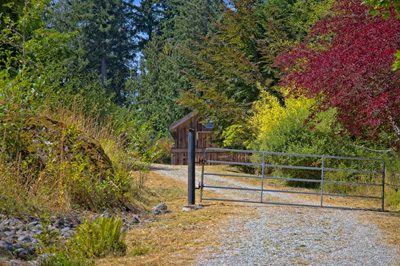
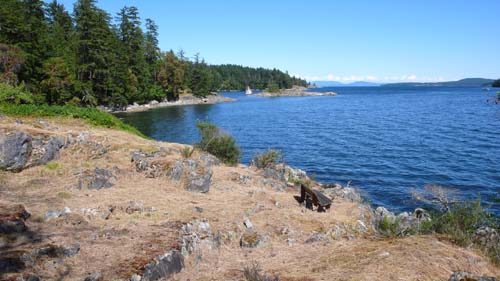
Early spring on Salt Spring Island

Weather & Market Outlook

February might continue January’s Pineapple Express weather with mild temperatures and early flowering…or it may say “not so fast” and throw real Winter our way. In either case, it’s a short and sweet month, and after the practice run of almost daily changes in 2025, we are probably now able to digest any further disrupting shifts.

Real estate in our secondary home/recreational area continues to be characterized by low inventory and relatively stable pricing. Potential buyers inquire, may turn up to view (no local market here), but offer outcomes still are full of hesitations. This scenario has been in place for almost five years. Will 2026 be the improvement year? Many forecasters think so.

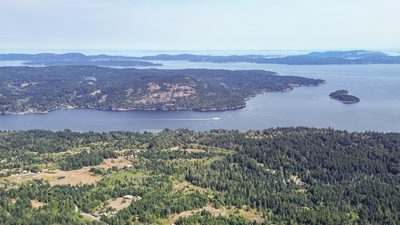
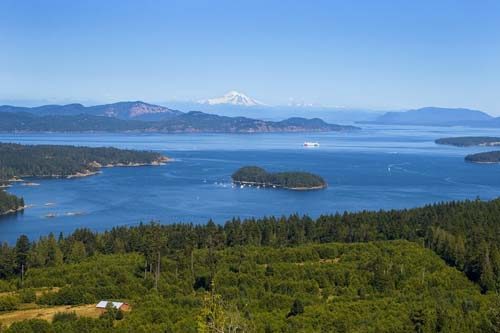
Gulf Islands landscape

The Two-Step Dance

It’s always a two step dance in any buyer decisions: step one is to decide which Gulf Island to buy on. Then one decides what property to choose in that locale.

It all takes time for a buyer decision and most sellers understand it can take one to two years to sell their property. Days on market may be important in a primary residence/city market, but are meaningless in a secondary home/rural region, with no local buyer pool.

Balanced Market

~380

listings on Salt Spring

Current Inventory

~89

listings on VREB

Definitely low inventory! The desire to buy is still accompanied by caution, hesitancy, concern.

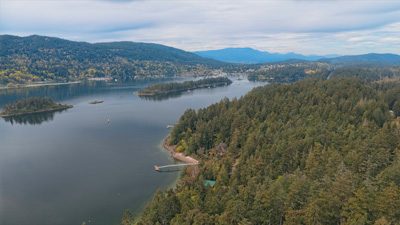
Pacific Northwest Coast

An Epochal Time of Change

The impact of tariffs, the geopolitical concerns, the individual wars and rumours of larger wars, the polarization of political issues…add in AI and crypto currency…by the time we arrive at the end of 2026, we may not recognize the earlier days of the year.

It’s ever more important to practice our peripheral vision. Tunnel vision, prepared for us to fall into, no longer works. We seem to be in an epochal time of change. We don’t get to choose our time, but we do get to choose our response. This may be our Gutenberg moment. Important to remember that in change lies opportunity.

Salt Spring Island

Ownership Considerations

Already own on Salt Spring or a Gulf Island? A good idea to retain. Trying to buy? Perhaps shared ownership would be a key to positive results? Allow one to build equity and move on?

It’s important to consider options and not assume there’s only one way to accomplish our dream.

Interested in Ownership?

Interested in ownership on Salt Spring or a Gulf Island? Look forward to helping you to discover your special opportunity. Wanting updated market information, to understand market effects on your property? Contact me. Your best interests are my motivation.

We are all lucky to be on this thin strip of coastal beauty known as the Pacific Northwest Coast.

It’s February…enjoy!

January 2026, Market Analysis


January 2026

Welcome to the New Year

Salt Spring Island

January is an interesting month. Named for the ancient Roman god, Janus, who had two faces (one looking behind and the other facing forward), this month begins with a continuation of late December and ends with the New Year in place.

January’s gift: every day is a little longer as the slow march to Spring is underway.

Winter landscape

The Five-Year Buyer Pause

Almost five years of hesitation, delay, and caution on the part of buyers characterized the post-COVID time. This hesitation in sales outcomes was a cross-Canada issue. At the same time, listing inventory remained low and pricings continued to be relatively stable. It may be that 2025 was the most unexpected and turbulent of the five year “buyer pause”.

Market conditions

2025: A Year of Turbulence

2025 saw Prime Minister Trudeau step down and also prorogue parliament. President Trump’s tariffs were put in place. A leadership contest for Trudeau’s federal Liberal party took place and then a federal election.

In B.C., the outcome of a 500 day court case occurred (Cowichan vs Canada), which was about land title. Is it indigenous title? Or fee simple title? It cannot be both. The NDP provincial government apparently did not allow the affected property owners to know about the case. Various appeals have gone in. The Premier recently said he would amend the U.N. Indigenous rights document…a week later, 50 tribes had signed paperwork to alert the Premier that there would be no amendments.

So, who owns a property in B.C.? The hesitation dance from buyers continues.

British Columbia

Looking Ahead: 2026 and Beyond

And 2026? Some well-known and successful Canadian pundits say a slow recovery will be underway, for most provinces. The unresolved title issue in B.C. may keep B.C. suppressed. No one has a crystal ball!

That said, the impact of AI and robotics implies new industries, new decisions…and therefore new and more likely more successful outcomes. Markets do have lives…it may be that 2026 & 2027 will bring new and positive results…things that are not necessarily on the radar of possibilities right this minute will appear. And what about crypto currencies? Hmmm……

Remember Janus: facing backward and also looking forward. I write this on January 1st, knowing that new ideas will be in place before the end of this month. I will report in.

Spring roots

The Root Level

Meantime, it’s January. This is the root level of the growth process in gardens and orchards. To a casual observer, the pastures and bare trees look dead. At the root level, it’s vibrantly busy. Suddenly Spring’s eruption of visible growth will arrive.

That’s our role right now. A time to get ready for that inspiring arrival. A restorative time to ready our personal roots for the new possibilities. What’s on your “to do” list? Share!

Year of the Fire Horse

Year of the Fire Horse

Oh, by the way, the Asian Lunar New Year begins on February 17. It’s the Year of the Fire Horse in 2026. That sounds active and spirited and new. Six weeks to be ready? Gallop on!

Happy New Year!

December, 2025

December Market Update: Festive Spirit & Real Estate Insights

Gulf Islands December celebrations

December arrives with its festive spirit. Traditions, including the reason for this season of Christmas, annually welcome us. During this darkest time of year, we have lights and celebrations to give us heart.

Craft fairs are showcasing special gift options, seasonal music and theatre opportunities add to the enjoyment, special menus invite us to our great restaurants, and the community light-up and decorated sailboats in the Harbour welcome us in this month of celebrations.

Year-End Real Estate Activity

Real estate activity can be buoyant at this year-end time. The cautious buyers who had been inactive in sales during 2022 and 2023 did make some tentative movements forward between October 2024 and January 2025. Then the many global changes erupted in February, and hesitation ruled once more.

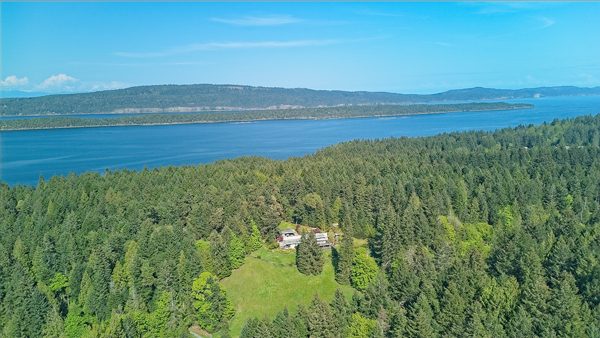
Salt Spring Island winter property

Since 2016, the buyers for Salt Spring, Gulf Islands, Vancouver Island have been mainly from Vancouver…there is no local buyer. Action in that city/primary home marketplace drives activity in the rural/secondary home markets…approximately 30 days later. Vancouver activity in September 2025 saw action begin here in October.

It takes time to sell a property in a secondary home/recreational region as the buyer first has to discover an area and a listing, then turn up to check out the area, and then return for second and even third viewings before making the decision as to destination.

Real Estate Market Update

Time Lags

One to two years typical for secondary home region sales

Inventory

Remained low despite societal changes in 2025

Pricing

Quite stable through disruption

Time lags (could be one to two years) are a part of every secondary home region sale. Add to this typical scenario our current shift into immense societal change, and that “pause time” can expand dramatically.

The Buyer’s Mindset

There is always opportunity, and as a buyer it’s important to remember:

  1. Perfection is not the goal
  2. Practice periphery and not tunnel vision
  3. When the reaction goes “ping”, then act
  4. There is only one direction…forward
Gulf Islands property opportunity

“Pundit people” are now forecasting good outcomes for real estate in a projected buoyant first two quarters of 2026, particularly in rural/recreational areas. Reluctant buyers due to fear and caution may have digested uncertainty and now be planning action. Continuing low inventory may bring price increases forward.

Whatever the outcomes that emerge, change wrought by AI will continue to bring significant options forward that are not even being thought about right now. Yes…in change lies opportunity.

Salt Spring Island winter lifestyle

December Traditions

  • Holland: St Nicholas on December 5
  • Sweden: St Lucia celebration on December 14
  • England: Twelve Days of Christmas (Dec 24 – Jan 6)
  • France: Reveillon on December 24
  • Scotland: Hogmanay New Year celebration

Looking Ahead: Gratitude & New Beginnings

December invites us to contemplate gratitude and kindness. To share with those who might be experiencing loss and loneliness. It is a time to give. Sometimes, it’s illuminating to try on other traditions.

Special meals, baking treats, traditional music and carols. If it seems a quiet year, then it makes sense to let all traditions speak to us.

The Asian Lunar New Year welcomes in the Year of the Fire Horse on February 17, 2026. Ready to gallop? Let’s go!

Trust as the Foundation of Property Ownership: The Future of Fee-Simple Title and the Torrens System in British Columbia

From British Columbia Real Estate Association (BCREA)

Discussion Paper – October 2025

Trust as the Foundation of Property Ownership:
The Future of Fee-Simple Title and the Torrens System in British Columbia

Introduction

British Columbia’s land-title system rests on one of the most powerful social compacts in modern economic life: trust. Buyers, sellers, lenders, governments, and communities rely on a shared belief that registered title is secure, complete, and final. That belief is foundational to property and land transfer, and it is what has fostered a stable and sustainable structure for the real estate market.

Today, that trust is being questioned. Court decisions such as Cowichan Tribes v. Canada (AG) (2025 BCSC 1490) have challenged perceptions about the absolute nature of fee-simple ownership. The Cowichan decision confirmed that Aboriginal title may be declared over lands that include existing fee-simple parcels, clarifying that the Land Title Act’s principle of indefeasibility does not extinguish constitutionally protected Aboriginal title. While the judgment did not invalidate private ownership, it reframed the relationship between Crown-granted title and Indigenous rights, emphasizing the need for reconciliation through negotiation and accommodation rather than assumption of exclusivity.

Meanwhile, new legislation such as Bill 13 – the Land Title and Property Law Amendment Act, 2024 – invites First Nations into direct participation in the Torrens registry.

Key Questions for the Real Estate Sector

Together, these developments raise important questions for regulators, practitioners, and the public:

  • Can confidence in fee-simple title be maintained when overlapping claims of Aboriginal title are recognized by the courts?
  • How does the real estate profession sustain market trust amid uncertainty?
  • What role could organizations like the BC Real Estate Association (BCREA) play in strengthening that trust?

This paper does not seek to resolve questions of reconciliation or the constitutional place of Aboriginal title. Rather, it aims to frame the conversation around trust and confidence, which are the bedrock on which property ownership, investment, and the public’s faith in the Torrens system depend.

Defining the Framework

Aboriginal Title

Aboriginal title is a collective, constitutionally protected interest in land rooted in Indigenous occupation prior to colonization. It carries the right to decide how land is used and to benefit from its uses, subject only to justified Crown infringement (Delgamuukw v. BC, 1997; Tsilhqot’in Nation v. BC, 2014). It is a real interest in land, not merely a right to use, and exists independently of Crown grants or registration.

Fee-Simple Title

Fee-simple ownership is the highest form of estate recognized by common law. It grants the holder broad powers to use, transfer, or encumber the property, limited only by law or by private restrictions. In BC, the fee-simple estate is given force and certainty through the Torrens system, which guarantees that the person registered on title is the legal owner, and that the register itself is conclusive evidence of ownership.

In theory, the two concepts of Aboriginal title and fee-simple title operate on separate planes: one constitutional, the other statutory. In practice, recent jurisprudence suggests they can overlap. Where they do, the tension is not merely legal but existential: Can these two forms of ownership coexist within a single regime built on singular certainty?

Trust as the Operating Currency of the Property System

In The Speed of Trust, Stephen M.R. Covey writes that “trust is the one thing that changes everything.” He argues that where trust is high, “speed goes up and cost goes down.” The inverse is also true: Where trust is low, transactions slow, costs rise, and relationships fracture.

Nowhere is this more evident than in real estate. Each conveyance, mortgage, and subdivision presupposes confidence in the system’s accuracy and impartiality. If that confidence erodes through uncertainty, conflicting claims, or opaque processes, then market efficiency collapses.

Covey’s definition of trust is built on the dual foundations of character and competence, and offers a powerful lens through which to view British Columbia’s land-title ecosystem. The system’s character is expressed through the integrity, transparency, and ethical standards of the institutions and regulated professionals who uphold it, such as the Land Title and Survey Authority, the Land Title Office, lawyers, notaries, and REALTORS®. Its competence is demonstrated through the technical reliability and legal precision of title registration, conveyancing, and dispute-resolution processes. Together, these attributes create the credibility that allows every participant, from first-time homebuyers to institutional lenders, to transact with confidence that the title they see is the truth they can rely on.

For over a century, BC’s Torrens system has embodied both. Its success depends not only on accuracy but on public belief in accuracy, a belief that the registry is the single source of truth. When that belief is shaken, the entire system slows: Lenders re-evaluate risk, developers hesitate, and consumers lose confidence.

The Property Trust Equation

Economist Hernando de Soto, in The Mystery of Capital, observed that what distinguishes successful economies is not simply ownership, but formalized ownership (the ability to record, prove, and transfer rights with certainty). He argued that secure property systems turn “dead capital” (informal, unrecorded holdings) into “live capital” capable of generating credit, investment, and growth.

BC’s Torrens system is precisely such a formalization mechanism. It converts land into capital by ensuring the owner’s right is public, provable, and enforceable. De Soto’s insight also illuminates what is at stake when trust in that system wavers: When ownership becomes uncertain or contestable, capital formation deteriorates, and markets constrict.

Incorporating de Soto’s reasoning into the BC context underscores a key policy principle: Clarity is equity. The more transparent and reliable the system, the more equitable and prosperous it becomes. Conversely, when the boundaries of ownership blur, economic participation can narrow, particularly for those least equipped to navigate complexity.

Bill 13 – Land Title and Property Law Amendment Act, 2024

Bill 13 represents a milestone in the modernization of BC’s property system. By amending the Land Title Act and Property Law Act, it allows First Nations to hold and register fee-simple interests directly in their own names, removing the colonial-era requirement to use corporations, trusts, or proxies.

This reform extends participation within the established system. As Murray Rankin, Minister of Indigenous Relations and Reconciliation, stated, “First Nations will have the ability to purchase and hold fee-simple land directly, just as individuals and corporations have long been able to do.” The First Nations Summit called the legislation “a small but very meaningful step to clear unnecessary and often invisible interference,” and the BC Association of First Nations characterized it as “a vital tool for our continued Nation rebuilding efforts.”

For BCREA, Bill 13 exemplifies how trust and inclusion can reinforce one another. Enabling First Nations to participate fully in the same land-title regime invites shared legitimacy for all users. It demonstrates that modernization need not threaten market confidence as long as reforms are transparent, consultative, and operationally clear.

In parallel with these legislative reforms, the Land Title and Survey Authority is developing the First Nations Land Governance Registry in partnership with the First Nations Land Management Resource Centre and the Lands Advisory Board. This initiative will provide digital infrastructure for First Nations operating under land codes, integrating with the national land-title ecosystem. Together, projects like this and Bill 13 demonstrate that modernization is not about abandoning or defending colonial constructs, but about bridging governance systems and creating transparent, interoperable frameworks that serve all stakeholders.

The Fragility of Trust: When Confidence Falters

The real estate sector understands better than most that confidence is the engine of the market. When it falters, regulation tightens, transaction costs climb, and the pace of economic activity slows. We have to go no further back in history than April 2, 2025, when the United States imposed sweeping tariffs, destabilizing confidence in many markets. The property ecosystem, including brokerages, lawyers, notaries, appraisers, lenders, regulators, and others, depends on a seamless chain of confidence.

In an environment where the public hears that Aboriginal title may coexist with fee-simple ownership, uncertainty can spread quickly through the marketplace. Lenders, insurers and others may begin to reassess risk, buyers may hesitate to proceed, and sellers could encounter reduced liquidity. For licensees and lawyers, shifting due-diligence standards may see practices evolve faster than regulations. In turn, regulators may respond by introducing new compliance and disclosure frameworks, the need for which could be perceived by the consumer as acknowledgement that something is wrong. In this case, these controls must be established to stabilize trust, not unintentionally incite fear, further diminishing trust and destabilizing confidence.

The Role of BCREA: Stewarding Confidence

As the professional voice for REALTORS® in British Columbia, BCREA occupies a unique position between the market, the public, and government. Our role is not to litigate ownership questions but to advocate for systems that preserve certainty, transparency, and confidence for everyone who transacts in real property, while supporting REALTORS®, managing brokers, consumers, and other stakeholders as they navigate the complexities that come with this quickly evolving environment.

Communication and Support form the first pillar of this role. BCREA will work with other stakeholders, such as the BC Financial Services Authority and Real Estate Errors and Omissions Insurance Corporation, to contribute to the development of messaging and guidance that will best inform the decisions of REALTORS® and their clients. There is a tremendous amount of complexity, history, and perspectives associated with every aspect of this expansive issue, which challenges the efforts to provide timely, responsive, and evolving updates, but BCREA will endeavour to do just that. As the case proceeds through potential appeals (a process that could take years), clear and consistent communication from both government and the sector will be crucial to maintaining public confidence in the Torrens system and preventing market uncertainty.

The second pillar is Advocacy and Participation in the Dialogue. BCREA has a duty to ensure that government decisions affecting property ownership promote and instill trust. This means working collaboratively with stakeholders and all levels of government to shape policies that maintain confidence in registered title. Through constructive advocacy, BCREA can amplify the message that certainty in property rights is not at odds with social progress but is the platform on which that progress depends.

Conclusion

The question is not whether the recognition of Aboriginal title or the introduction of new ownership forms will destabilize BC’s property system. The question is whether the stewards of that system can sustain public trust through clarity, communication, and competence.

For BCREA, that means championing the principles that underpin real estate in this province: transparency in title, integrity in practice, and confidence in ownership.

In the coming years, the landscape will continue to shift, and each step toward mutual understanding renews not only the process of reconciliation but also the public trust that underpins our shared prosperity. And if trust remains the measure by which we judge our systems, then both Aboriginal title and fee-simple title can find their rightful place within an ecosystem built on confidence: an ecosystem that honours the past, serves the present, and secures the future of property ownership in British Columbia.