Island Charisma
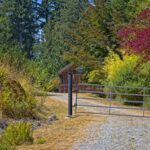
Beautifully created cottage/home, with the appeal of a Coastal Living ethic, and with a separate garage/studio space (artist? home occupation?), spacious decking to expand summer living pleasures, deer fenced garden and orchard, and an essential sense of calm, to rest the soul
All Things Salt Spring | Li Read & Drew
[podcast]https://lireadgroup.com/blog/wp-content/podcasts/Li-Read-Drew-Clark.mp3[/podcast]
Salt Spring Island Real Estate | April 2011
Salt Spring Island Real Estate | April 2011
I often think that the real estate year falls into distinct “thirds”, in our secondary home/discretionary marketplace.
The first third is that January to April timeframe, and so here we are, moving into the last weeks of the first third segment.
Traditionally, sales in January/February are usually outcomes of business from the previous year. Perhaps the buyer chose to make the offer/complete the transaction in a new tax year, but were really thinking about a purchase in the previous year. A sale in the first six weeks, then, of a new year, is not often “new business”.

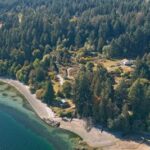
Salt Spring Island Real Estate | Seashore Beauty
I often think that a clear picture of the market in any given year isn’t possible until April. March Break activity will have taken place by then, and a forerunner of potential Summer business will have shown itself.
Quite often, the emergence of March Break’s early tendrils do flower into a real Summer season. No action in March Break usually means no activity in the “second third”. That is what happened in 2008, 2009, and 2010…a “flat” market.
A slow “uptick” in all residential , not just in entry level price options, began to show itself by mid-October, 2010. Undeveloped land and commercial options remained quiet.
Throughout 2006 and 2007, “flat” conditions prevailed. 2008 saw the plunge into “market meltdown” territory and a full “stop” to action. Only entry level residential options saw activity from March 2009 to September 2010, and there were very wide price gaps between list and sale pricings.
Price reductions, without resulting in either more showings or in sales, were the pattern throughout 2009 and 2010.
Buyers did not want to act, and in a secondary home marketplace, where a purchase is by choice/not a necessity, nothing happens unless a buyer comes forward.
Such discretionary markets are totally in the control of the buyer, not the seller or the realtor.
Post-meltdown, fear stopped action. Sales were few and far between.
Appraisers report that prices reduced between early 2007 and late 2010 by 20 to 30 percent, depending on the type of property involved.
Now the fear of currency instability, post-bailouts, and a seeking of a “safe haven”, in the aftermath of all the resulting societal unrest, may be behind the current return to hard asset investments. Fear can also “propel”.
Or, the renewed interest in discretionary residential real estate may be the simple outcome of the seven year cycle theory.
Seven years up and seven years down…neither scenario in a straight line, of course. It’s one market “philosophy”.
So, are we in year six of a seven year downturn? If so, that’s like 1998-9, and look what happened by 2001-2…a sellers market of huge proportions!
The sales frenzy currently underway in four Vancouver neighbourhoods (West Van, West Side, Richmond, White Rock), driven by Asian buyers (Mainland China), may result in those sellers arriving in the Gulf Islands, on Vancouver Island, on the Sunshine Coast, into the Okanagan “grid”…the very discretionary areas which have been so “flat” in the past four years.
Nothing ever stays up or down forever…and the shift in either direction happens quickly when the “turn” is almost there.
Economic issues continue, “natural” disasters shock, civil wars unexpectedly erupt, societal unrest everywhere…the “global village” is full of unrest and seems without a road map in hand. No one is immune to the societal shifts in this post-internet world.
Locally, businesses reliant on tourism/discretionary buyers (restaurants, galleries, artist studio tours, kayak, scooter, car rentals, B and B, resorts, floatplanes, ferries, hotel, motel, grocery stores, contractors, architects…did I leave anyone out?) also experienced the “pause period” of the past four flat/non-active years. Real estate is a foreteller industry, in a community’s life.
With improving sales patterns, we’re seeing new building, completion of earlier projects, a “freshening” of business/tourism ideas (Blossom Festival in early April is just one example).
What we do know for sure: low interest rates, reduced prices, good inventory…it is a time to be a buyer, and it appears that thoughtful investors are acting.
If undeveloped land starts to sell strongly, which, I think, may occur by late Fall/early 2012, we would then be starting into sellers market conditions again. That’s definitely a positive market indicator, movement in raw land!
So…we are nearing the important “middle third” (May to September), in our secondary home area, which is when the majority of sales take place, IF they are going to occur.
The rhythm of connection seems to be present, for the first time in four years, and buyers are apparently slowly deciding to “act”, and in all residential price ranges.
It is a new and heartening pattern that has shown itself, in these important first months of 2011…good news, indeed!
How may I help you to buy your special Salt Spring Island or Southern Gulf Islands property? I look forward to your call!
Gulf Islands National Park Reserve
The Gulf Islands National Park Reserve was created to preserve the Gulf Islands natural beauty, and to protect several ecological sensitive areas.
The park consists of Cabbage Island, Tumbo Island, Portland Island, Brackman Island, The Sidney Island Spit, D’Arcy Island, Russell Island, parts of Pender Island, and almost half of Saturna Island. The park also includes several small islets off the Georgia Strait side of Mayne Island and Samuel Island.
The facilities available depend on location and may include: mooring buoys, dockage, dinghy dock, stern ties, outhouses, walking / hiking trails. Some portions of the park are ecological reserves and are not open to the public.
Visitor Guide & Hiking/Camping Brochure
Contact Information
- Address: 2220 Harbour Road, Sidney, BC, V8L 2P6
- Tel: 1-250-654-4000
- Toll-Free: 1-866-944-1744
Park Wardens
Civil Politics on the Gulf Islands | BC
Leave a reply
Civic politics…on the Gulf Islands this means the Islands Trust.
Every three years, throughout B.C., one elects mayors and councillors, if the area is a municipality.
The Gulf Islands are not municipalities. In 1974, the provincial government created the Islands Trust…its mandate is “
Strict zoning/density bylaws were brought into being to control growth.
Two trustees were elected for each Island.
The “water access only islands” were tied to a ferry accessed island, when it came to specific bylaws, particularized for each island, over and above the umbrella items that apply overall to all Gulf Islands.
The Trust’s mandate is to oversee land use bylaw issues.
Things like building permits, septic installations, etc., were under the control of the CRD (Capital Regional District), if close to Victoria. Vancouver and Vancouver Island have their equivalent bodies. The CRD would oversee all unincorporated areas close to Victoria, including the Southern Gulf Islands.
Over time, the OCP (Official Community Plan) for each Island would have been amended to reflect a particular Island’s concerns.
On Salt Spring, after many years, an OCP review took place in the 1990s, and another one in mid-2000s.
In the 1990s, reflecting a time where the government was needing to offload some costs generally, the then NDP government came up with the idea of creating a Gulf Islands Municipality category.
Under this, the Trust would remain in place, with 2 elected Trustees, but the CRD position (also an elected office, at civic election time) would be replaced by an elected council, and the Island choosing this specialized form of municipal structure would be more autonomous with costs. This would, of course, save the government money.
The two islands approached about this type of municipal structure, due to their population and infrastructure growth, were Bowen, in Howe Sound, and Salt Spring. Both Islands turned down the proposal, in a referendum, chiefly out of fear that taxes would rise.
In a second referendum, at a later date, Bowen voted yes, and that Island does have this Gulf Islands Municipality structure in place.
On Salt Spring, a group called Islanders for Self-Government has recently been attempting to get the government to approve a second referendum, to allow Salt Springer’s to reconsider their earlier “no” to the proposal.
In the intervening years, taxes have risen sharply, under the Trust/CRD format, and further costs are set to escalate. The current Trustees have enjoyed a second term, and have put in place many bylaw amendments, re-interpretations perhaps, that are meeting with opposition from many Islanders.
This is an
If you’re a property owner on Salt Spring, it’s very important to keep up to date. Several changes or re-interpretations do appear to be underway, and many of same will affect you. Whether you’re a seasonal or a full-time resident, be informed!
Check out the Trust’s website, and read all of the proposed changes. Pay attention to requests to raise taxes to implement some ideas. Apathy is not an option!
Ask the ISG (Islanders for Self-Government) group to explain their ideas. Again, just “be informed”.
Ask the Chamber of Commerce to be accountable, too, in their mandate (which is to lobby the government on behalf of small business…to give local business a voice). A strong business community is the marker of a lively and enriching overall community. Salt Spring’s Chamber has ignored this duty in the past, by choice.
So many shifts and changes lately, and Salt Spring is not exempt. Important to listen to alternative opinion, and to speak one’s own calmly…courtesy is an aspect of strong community spirit, too.
This is an important year in the Island’s “life”…it needs all the Islanders to step forward and to “act” for the Island’s best interests.
Being informed is a start….